
Wheelie Life
ak.devRacing
4.370.00 Reviews
- Version
- 4.7
- Installs
- 1.00M
- Age Rating
- Everyone
Screenshots


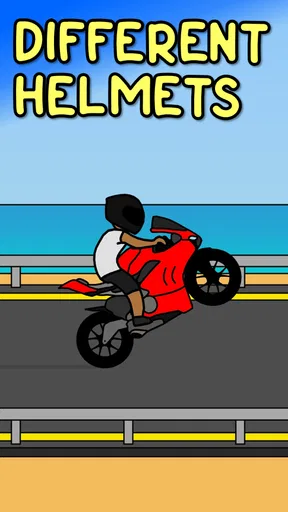
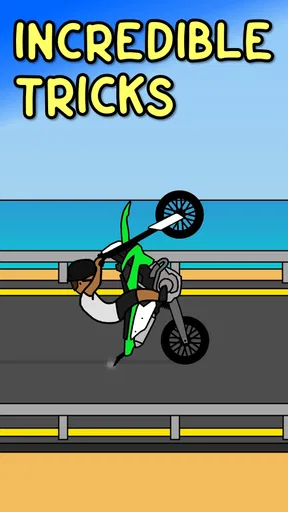
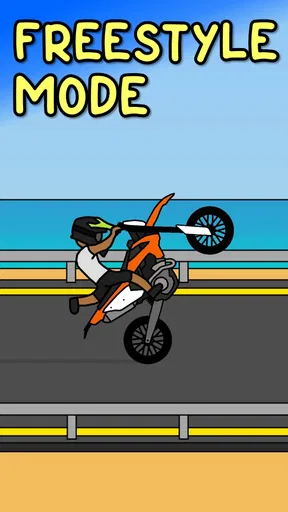
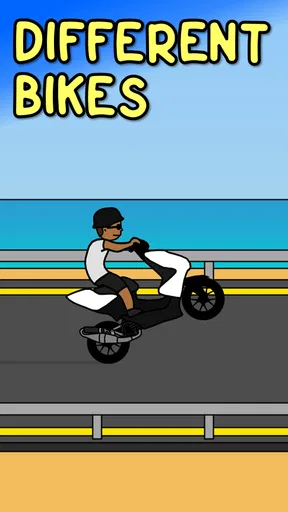
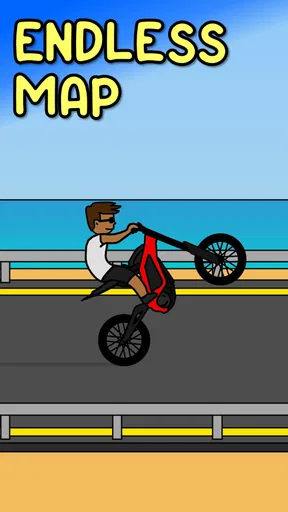
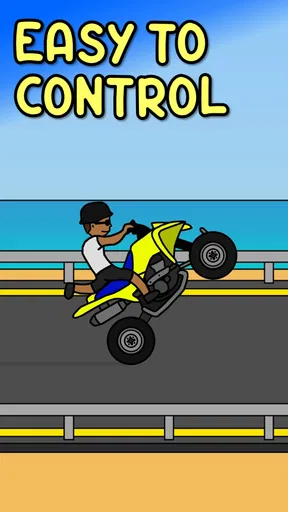
Our Review of Wheelie Life
 Analysis by Appyee
I approached Wheelie Life expecting a quick arcade ride, but its appeal is more focused than that. This free racing game from ak.dev is built around one skill: keeping a bike balanced on its rear wheel for as long as possible. That sounds simple, yet the moment I tried to hold a wheelie instead of merely starting one, the game became a test of timing, patience, and small corrections.
The idea works because it gives every short session a clear purpose. I do not need to learn a large set of complicated controls before having fun. I can open the game, make a few attempts, notice where my balance went wrong, and try again. For someone who enjoys compact challenges on a phone, that directness is a real strength.
What the first ride feels like
The game presents itself as a 2D bike wheelie simulator, but I would describe the experience as a precision-focused racing game rather than a conventional race. I am not mainly thinking about overtaking opponents or choosing the fastest route. My attention stays on the bike’s angle, the rhythm of my input, and the point where a controlled lift turns into a crash.
That distinction matters when deciding whether it is right for you. If you want a motorcycle game with long events, deep vehicle tuning, or a broad career structure, this will probably feel too narrow. If you like games where one mechanic is easy to understand but difficult to master, the focused design is much more attractive.
I found the best early sessions came from treating each attempt as practice rather than a final test. The first successful lift may last only briefly, and that is fine. The useful question is not simply whether I stayed up, but what happened just before the bike came down. Was my correction too late? Did I react too strongly? Did I keep making inputs after the bike was already stable? Watching those moments turns repetition into learning.
The game is free to download and is suitable for Everyone, which makes it easy to recommend for casual play in a family setting. It supports Android devices running version 7.0 or later. The current version is 4.7, and the game has grown to more than a million installs, while its average rating sits at 4.3 from roughly three and a half thousand ratings. Those figures suggest that the simple wheelie concept has found a sizeable audience without needing to imitate a full console-style racer.
Why the narrow idea works
Many mobile racing games try to offer several activities at once: circuit races, upgrades, unlocks, challenges, and collectible vehicles. Wheelie Life takes the opposite route. Its identity comes from making one action the entire reason to play. That gives it a clean learning curve, but it also means the game’s value depends heavily on whether you enjoy repeating the same basic task with increasing control.
In my experience, the most satisfying part is the moment a movement that felt random starts to feel intentional. At first, I reacted to the bike after it had already tilted too far. Later, I began making smaller corrections earlier. That change is subtle, but it is exactly the kind of progress that keeps a minimalist game interesting.
There is also a useful difference between playing for a few minutes and playing with a personal target. A short break might be enough to improve one attempt. A longer session works better if I choose a specific goal, such as making the lift smoother or recovering from a slight tilt instead of restarting immediately. Without a target, the repeated attempts can blur together.
Getting started without wasting the first attempts
My advice for a first-time player is to begin slowly and resist the urge to make large corrections. The opening instinct is usually to hold the control for too long, see the front wheel rise, panic, and then reverse the movement sharply. That creates a cycle of overcorrection. A calmer approach gives the bike time to respond and makes the result easier to understand.
Before chasing a long wheelie, I would spend a few attempts learning the relationship between input and movement. Use the first tries to notice how quickly the bike reacts, how much correction is needed once the front wheel is raised, and how early a mistake needs to be addressed. This is more productive than immediately trying to beat a personal best.
A practical routine helped me. I separated my first few attempts into three stages: lifting the front wheel, holding a stable angle, and recovering when the bike began to lean. The third stage is easy to ignore, but it is where much of the improvement happens. A player who only practices the initial lift may become good at starting a wheelie without becoming good at maintaining one.
The controls are simple enough to pick up quickly, but that does not mean they are forgiving. A touch that feels tiny on the screen can still change the bike’s position at the wrong moment. I found it better to keep my finger relaxed and make deliberate adjustments instead of tapping repeatedly. The goal is a steady conversation with the bike, not a frantic series of commands.
Finding the first meaningful success
The first success I would aim for is not an impressive distance or a dramatic stunt. It is a controlled sequence: lift the front wheel, hold the balance briefly, and bring the bike back down without losing control. That sequence teaches more than a lucky extended run because it includes the beginning, middle, and end of the action.
When I finally made a clean attempt, the important improvement was not speed. It was recognizing the bike’s movement early enough to respond. That is the central skill here. The game rewards anticipation more than force, and players who are used to holding a racing button continuously may need to change their habits.
If your first attempts end quickly, do not assume the game is malfunctioning or that your phone is unsuitable. Short failures are part of the learning process. Try changing one thing at a time: use a gentler lift, reduce the size of your correction, or stop touching the control for a moment when the bike is already balanced. Changing several things together makes it hard to know what helped.
One non-obvious tip is to judge the timing of your correction by the direction of the bike rather than by the length of the wheelie. A longer attempt is not automatically a better attempt if the bike is wobbling wildly. A shorter run with a calm angle gives you a more useful foundation for improvement. I would rather repeat a stable pattern than chase a lucky result that I cannot reproduce.
Confusing moments and how I handled them
The main source of confusion is the difference between starting a wheelie and controlling it. Those are related but separate skills. A player can discover the input needed to raise the front wheel and still feel stuck because the bike immediately falls. The solution is not necessarily more input. Often, the correction needs to happen earlier and with less intensity.
Another common mistake is treating every fall as a reason to restart mentally. I learned more when I paid attention to the final moment before the crash. If the bike was already leaning too far, the useful lesson was about recognizing that position sooner. If it was stable and then suddenly dropped, I had probably interrupted a good balance with an unnecessary movement.
The game can also feel repetitive if I play without a plan. That is a limitation of its focused design, not something I would hide from a new player. I recommend short sessions at first. Stop after a few attempts that teach you something, then return later. This keeps the challenge fresh and prevents the simple control loop from becoming tiring.
There is a practical trade-off with the free model as well. The game costs nothing to start, but in-app purchases range from $2.99 to $8.49 per item. I would begin without spending anything and decide whether the core handling is enjoyable before considering any purchase. Since the central appeal comes from improving your control, paying is not a substitute for learning the mechanic.
Players who dislike repeated retries should think carefully before installing it. The game is not the best match for someone looking for a relaxed ride where success arrives automatically. It asks for attention, and small errors matter. On the other hand, if you enjoy retrying a compact challenge until your hands become more precise, the same limitation becomes the reason to keep playing.
Turning short sessions into steady progress
Once I could perform a basic wheelie, I stopped measuring progress only by the longest attempt. I started looking for consistency. Could I lift the bike without immediately losing the angle? Could I correct a wobble without making it worse? Could I finish an attempt in control instead of waiting for a crash? These questions gave ordinary sessions more structure.
A useful everyday scenario is a short break between tasks. I can play for a few minutes, focus on one specific adjustment, and close the game without needing to remember a complicated storyline or manage a long race. It also works well when I want a game that can be understood immediately but still has room for practice. The compact design makes it easier to return after a day away.
For a more deliberate practice session, I would use a simple progression. First, repeat the initial lift until it feels predictable. Next, concentrate on maintaining a moderate angle rather than pushing for maximum duration. Finally, practice recovery. This order avoids the common trap of trying advanced control before the basic movement is reliable.
Another helpful insight is that consistency exposes mistakes more clearly than a single record attempt. If one run lasts much longer than the others, it may have been luck. If several runs improve slightly, that usually means your timing is becoming repeatable. In a game built around balance, repeatability is the stronger sign of progress.
Compared with larger motorcycle racing alternatives, Wheelie Life is less varied but more immediate. A full racing game is better if you want tracks, opponents, vehicle choices, or a sense of progression across many events. This game is better when you want one mechanical challenge without the preparation that those alternatives require. I would not replace a complete racing game with it; I would choose it for a different mood.
It also differs from casual endless runners. Those games often emphasize avoiding obstacles while moving forward, whereas this one makes the bike’s balance the main event. The challenge is more controlled and deliberate. That may appeal to players who want to practice a specific action rather than react to a constant stream of hazards.
Who should install it, and who should skip it
I think it is a good choice for first-time players who enjoy physics-based challenges, short retry loops, and games that reward patience. It is especially suitable if you want to see improvement through your own timing rather than through character upgrades or equipment. The Everyone age rating also makes it a straightforward recommendation for broad audiences.
I would skip it if your priority is a rich racing campaign, realistic simulation depth, or a large collection of activities. The narrow wheelie focus is the whole point, so anyone who needs constant novelty may run out of reasons to continue. I would also avoid recommending it to someone who becomes frustrated by repeated small failures, because the game does not hide the fact that control takes practice.
My final recommendation is to install it with modest expectations and a specific first goal. Do not judge it by the first failed attempts. Give yourself time to learn the lift, then work on a stable hold and a controlled landing. If that process feels satisfying, the game has enough precision to keep drawing you back. If you are still looking for new tracks and changing race types after a few sessions, a broader racing title will be a better fit.
After trying it, I see Wheelie Life as a compact skill game disguised as a bike racer. It is free, approachable, and easy to start, but its real appeal appears only when I stop chasing instant success and begin paying attention to timing. For me, the best reason to play is the feeling of turning a shaky wheelie into a repeatable one. That is a small achievement, but the game makes it surprisingly satisfying.
Verdict
Strengths of Wheelie Life
- Realistic wheel physics make practicing wheelies feel rewarding.
- Open areas provide room to experiment without strict race objectives.
- Simple controls are easy to learn for casual players.
- Bike customization adds variety and personal style.
- Short sessions work well for quick mobile gameplay.
Limitations of Wheelie Life
- Physics can feel inconsistent after landing or hitting uneven surfaces.
- Limited gameplay objectives may become repetitive over time.
- Some bikes and customization options may require extra progression.
- Ads can interrupt the experience, depending on the version.
- Performance may vary on older or less powerful devices.
Similar Picks in This Category
View All
Hill Climb Racing
Fingersoft4.3

Dr. Driving
SUD Inc.4.2

Traffic Rider
skgames4.5

Asphalt 8 - Car Racing Game
Gameloft SE4.6

Race Master 3D: Car Racing
Beresnev Games4.6

Extreme Car Driving Simulator
AxesInMotion Racing4.3
Frequently Asked Questions
What is Wheelie Life, and what can I do in the game?
Wheelie Life is a motorcycle simulation game focused on performing and maintaining wheelies for as long as possible. Instead of following a traditional racing structure, you practice balance, control, and timing while riding through different environments. The game also includes bike customization options, allowing you to adjust the appearance of your motorcycle and create a riding style that feels personal.
Is Wheelie Life suitable for beginners?
Yes, Wheelie Life can be enjoyed by beginners, although controlling a motorcycle on one wheel requires some practice. The controls are relatively easy to understand, but keeping the bike balanced becomes more challenging as speed and movement increase. New players should begin slowly, learn how the throttle and steering respond, and practice in open areas before attempting longer or more complicated wheelies.
Does Wheelie Life require an internet connection to play?
Wheelie Life is primarily designed as a casual riding and stunt game, so many of its core activities can generally be enjoyed without a constant internet connection. However, certain features may depend on the version installed, including advertisements, updates, online content, or other connected services. It is best to download the game and check its current requirements before travelling or playing offline.
Are there motorcycle customization options in Wheelie Life?
Customization is one of the enjoyable parts of Wheelie Life. Players can usually personalize the motorcycle’s visual appearance through available colors, designs, or other style-related options, depending on the version and platform. These changes are mainly cosmetic rather than a complete mechanical tuning system, but they still make the riding experience feel more personal and help your bike stand out.
Is Wheelie Life free to download, and does it contain advertisements?
Wheelie Life is generally offered as a free download, which makes it easy to try before deciding whether it suits your preferences. Like many free mobile games, it may include advertisements or optional purchases, and the exact monetization system can vary between updates and platforms. Before installing, review the store listing for current information about ads, in-app purchases, permissions, and device compatibility.
Play our best games!


